
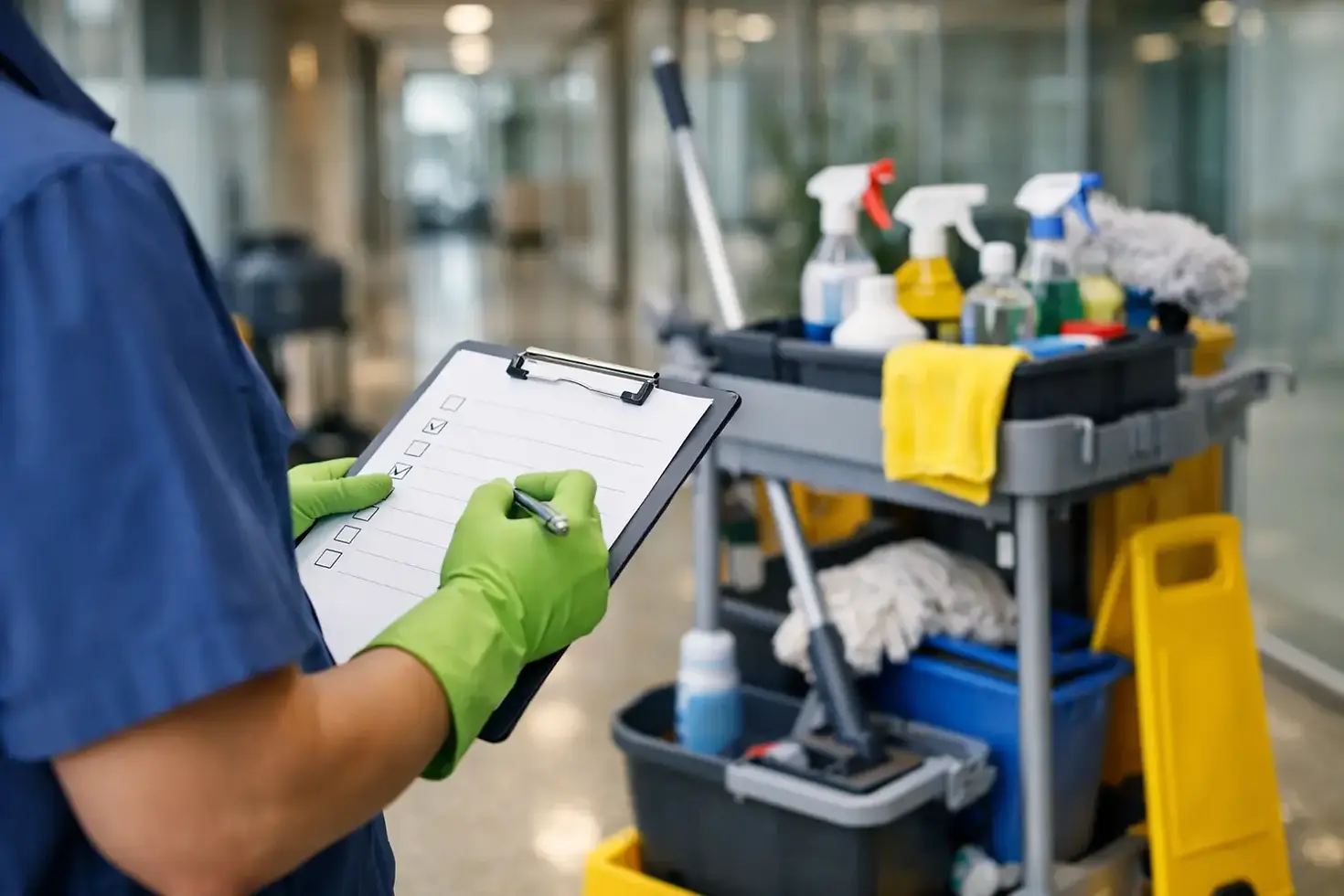
Best Commercial Cleaning Checklist for Facilities
A restroom complaint, a streaked lobby floor, or an overflowing trash bin can change how tenants, guests, patients, and employees view an entire facility. The best commercial cleaning checklist prevents those small misses from becoming recurring operational problems. It gives staff clear priorities, gives managers a way to verify results, and helps every shift protect the appearance and sanitation of the property.
A useful checklist is not a generic list of chores copied from one building to another. A medical office, hotel, school, restaurant, sports venue, and corporate office all have different traffic patterns, risk points, operating hours, and presentation standards. The right checklist is detailed enough to hold a cleaning team accountable, but flexible enough to respond when a facility has a busy event, construction work, a seasonal increase in visitors, or an unexpected spill.
What Makes a Commercial Cleaning Checklist Work
The strongest checklists are built around outcomes, not simply tasks. “Clean restroom” is too broad to inspect. “Disinfect high-touch restroom surfaces, restock soap and paper products, remove waste, clean fixtures, mop floors, and report maintenance issues” defines the expected result.
Each item should answer three practical questions: What must be cleaned? How often? What does completed work look like? Adding a fourth question - who confirms the work - makes the checklist far more valuable for managers overseeing multiple shifts or locations.
A checklist should also separate routine janitorial work from periodic specialty work. Daily attention keeps a property presentable. Scheduled floor care, carpet extraction, high dusting, grout scrubbing, interior window cleaning, and post-construction cleanup preserve the condition of the facility over time. Combining everything into one daily list often leads to rushed work or missed preventive maintenance.
Best Commercial Cleaning Checklist by Frequency
Every shift and daily priorities
Daily tasks should protect health, safety, and first impressions. High-traffic areas deserve the greatest attention because they show wear first and carry the most contact from employees, visitors, and customers.
Empty waste and recycling containers, replace liners, and remove waste to designated collection areas.
Disinfect high-touch points such as door handles, push plates, elevator buttons, railings, light switches, reception counters, shared equipment, and restroom fixtures.
Vacuum entry mats, carpeted walkways, offices, and common areas as scheduled for the facility's traffic level.
Sweep and damp mop hard-surface floors, with immediate attention to spills, tracked-in debris, and wet-floor hazards.
Clean and restock restrooms, including toilets, urinals, sinks, mirrors, dispensers, feminine hygiene receptacles, soap, tissue, towels, and hand sanitizer where provided.
Wipe visible dust, fingerprints, and smudges from reception furniture, glass doors, counters, tables, and other guest-facing surfaces.
Clean break rooms and food-service areas by wiping tables and counters, disinfecting shared appliances, removing trash, and addressing food debris.
Inspect entrances, lobbies, corridors, and exterior approach areas for litter, cobwebs, glass smudges, and safety concerns.
Daily checklists should include a clear process for exceptions. If a restroom fixture leaks, a dispenser is damaged, or a floor has damage that cannot be corrected through routine cleaning, the team should document and report it promptly. A cleaning crew often sees facility issues before anyone else does. That information is valuable only when it reaches the right person quickly.
Weekly detail work
Weekly work addresses the soil and buildup that daily service cannot always remove within a standard shift. This is where a facility either maintains its professional appearance or slowly begins to look neglected.
Focus on detailed vacuuming along edges and under accessible furniture, dusting ledges and low vents, spot-cleaning walls and partitions, polishing interior glass, cleaning waste receptacles, and wiping chair bases and furniture frames. In restrooms, weekly detail cleaning may include scrubbing tile, partitions, grout lines, and floor edges. Kitchen and break-room schedules should include cleaning microwave interiors, refrigerator exteriors and handles, cabinet fronts, and areas behind small appliances.
The exact scope depends on occupancy. A busy restaurant or athletic facility may need some “weekly” tasks completed several times a week. A lightly occupied administrative office may not. Frequency should follow actual use, not an arbitrary calendar.
Monthly and periodic maintenance
Periodic work protects costly building finishes and reaches areas that are easy to overlook. A monthly or quarterly checklist should identify these services in advance so they can be scheduled around business hours, events, tenant needs, and security requirements.
Typical periodic items include:
Machine scrubbing, burnishing, stripping, waxing, or refinishing hard floors based on the flooring type and wear level.
Carpet spotting, bonnet cleaning, hot-water extraction, and upholstery treatment where traffic and staining require it.
High dusting of vents, ceiling fixtures, exposed pipes, beams, ledges, and hard-to-reach surfaces.
Deep cleaning tile, grout, baseboards, partitions, and wall surfaces.
Interior and exterior window cleaning, including frames, sills, tracks, and entry glass.
Detailed cleaning of storage rooms, utility rooms, mechanical access areas, and less-used common spaces.
Floor care deserves its own schedule because the wrong method can cause avoidable damage. Natural stone, luxury vinyl tile, ceramic tile, concrete, and finished wood all require different products, equipment, and moisture control. A facility manager should confirm that the checklist identifies the floor surface and approved care method rather than using one vague instruction for every area.
Build the Checklist Around Your Facility Zones
A checklist becomes easier to manage when it is organized by zones. Instead of asking a team member to “complete the first floor,” assign defined spaces with clear standards: lobby, elevators, corridors, restrooms, conference rooms, offices, break room, loading area, and exterior entry.
For healthcare and educational environments, the checklist should put extra emphasis on disinfection procedures, restroom readiness, touchpoints, and documented completion. For hospitality properties, guest-facing areas may require repeated inspections throughout the day, especially during check-in, check-out, dining, or event periods. Restaurants need a stronger focus on food-area sanitation, grease-prone surfaces, and fast response to spills. Post-construction environments require a different approach altogether, including dust removal, debris removal, adhesive residue, fine-detail cleaning, and a final presentation inspection.
The trade-off is simple: more detailed checklists take longer to complete, but overly short lists leave too much to interpretation. The right level of detail reflects the facility's risk, visibility, and operational demands.
Add Inspection Standards, Not Just Checkboxes
A checked box does not always mean a space is clean. Managers need a practical inspection standard that can be confirmed visually and, where required, through sanitation procedures.
For example, lobby floors should be free of visible debris, streaking, and standing moisture. Restrooms should have no odor concerns, full dispensers, clean fixtures, dry floors, and emptied waste. Glass should be free of fingerprints and smears at normal viewing distance. Trash should be removed before containers overflow, not after.
Build inspection time into the schedule. Supervisors can verify a rotating selection of zones each shift, while facility managers may conduct weekly walkthroughs with the cleaning provider. This creates a record of performance and makes it easier to identify patterns, such as a recurring restroom supply issue or a lobby floor that needs more frequent attention during rainy weather.
Make Accountability Easy in the Field
The best checklist is one people can actually use during a shift. Keep it accessible, assign tasks by area and time, and include space for initials, service notes, supply needs, and reported repairs. Digital reporting can help when a manager needs real-time visibility, while paper checklists may still work well in smaller facilities or controlled work areas.
Avoid treating the checklist as a substitute for training. Team members still need to understand chemical safety, dwell times for disinfectants, cross-contamination prevention, equipment use, and site-specific rules. A checklist confirms the work. Training makes sure the work is performed correctly.
GD Pro Services approaches facility cleaning with that same focus on detailed execution, responsive communication, and results clients can count on. A well-built checklist gives every member of the cleaning team a shared standard, while giving facility leaders confidence that their property is ready for the people who walk through it next.
Start with the areas your visitors notice first and the sanitation points your operation cannot afford to miss. Once those standards are clear, your checklist becomes more than a task sheet - it becomes a dependable part of how your facility performs.


Comments