
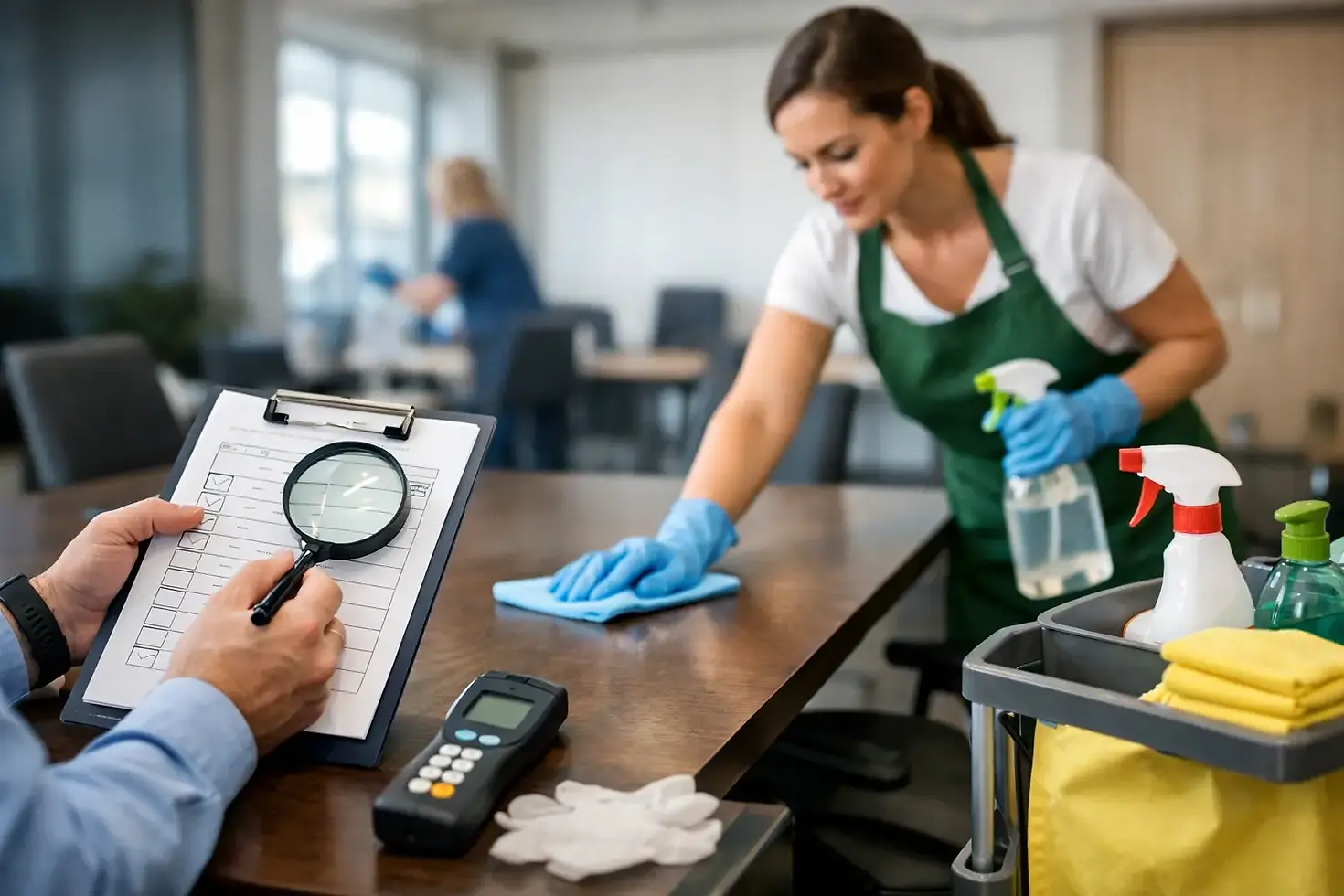
Cleaning Quality Control That Holds Up Daily
A spotless lobby at 8:00 a.m. means very little if restroom supplies run out by noon, fingerprints return to the entry glass, or a spill in a busy corridor goes unreported. Cleaning quality control is the operating discipline that keeps those details from becoming complaints, safety issues, or a poor first impression.
For facility managers, property managers, and operations leaders, the goal is not simply to confirm that a cleaning crew arrived. The goal is to verify that the work met the required standard, the site remained ready for use, and any issue was addressed before it affected employees, guests, tenants, patients, students, or visitors.
What Cleaning Quality Control Should Deliver
Quality control turns a service agreement into measurable performance. It defines what clean looks like in each area, identifies who checks the work, records what was found, and creates accountability for corrections. Without that structure, cleaning becomes subjective. One supervisor may consider a floor acceptable while a client sees streaking, debris along baseboards, or worn traffic lanes that need attention.
A strong program focuses on outcomes that matter to the facility. In an office, that may mean clean touchpoints, orderly common areas, and consistently stocked restrooms. In a healthcare setting, it means following site-specific sanitation procedures and documenting completion. At a hotel, it may mean guest-facing areas that remain presentable through constant traffic. A post-construction project requires a different standard altogether: detailed debris removal, dust control, glass cleaning, and final presentation before turnover.
The best inspection process does not treat every room the same. It gives higher-risk and higher-visibility spaces the attention they require. Entrance areas, restrooms, elevators, break rooms, dining areas, locker rooms, and high-touch surfaces usually need more frequent checks than low-traffic storage areas.
Start With Clear, Site-Specific Standards
A checklist is useful only when it reflects the actual facility. Generic lists often create a false sense of control because they confirm that broad tasks were completed without defining the result. “Clean restroom” is not a standard. “Empty waste, disinfect approved touchpoints, clean fixtures, remove visible soil from floors, replenish paper products, and report leaks or damage” gives the team something observable to complete and inspect.
Standards should account for the building’s use, traffic pattern, operating hours, and appearance expectations. A sports venue may need rapid response coverage during an event, while a school may need detailed cleaning after dismissal and before the next morning. A restaurant requires careful attention to front-of-house presentation and sanitation-sensitive areas. For managed properties, common areas may need frequent touch-up service to maintain tenant confidence throughout the day.
It also helps to separate routine cleaning from periodic work. Daily janitorial tasks, weekly detail work, monthly high dusting, carpet treatment, floor maintenance, window cleaning, grout and tile scrubbing, and upholstery care should not be blended into one vague expectation. When specialized work has its own scope and schedule, it is less likely to be missed until the condition becomes visible and costly.
Define What Can Be Checked
The strongest standards are visible and practical. An inspector should be able to walk an area and determine whether it passes. For example, floors should be free of loose debris and obvious streaks; glass should be free of smudges in the main line of sight; waste containers should be emptied according to the schedule; and supply levels should support expected traffic until the next service window.
Not every quality measure is visual. Odor, supply availability, response time, and proper placement of caution signs all affect the experience and safety of the building. Clear expectations give cleaning professionals the information they need to take ownership of the result.
Use Inspections to Prevent Repeat Problems
Inspections should occur at more than one level. A cleaner’s self-check catches small issues before leaving an area. A working supervisor can verify work during the shift, answer questions, and redirect labor when conditions change. Periodic management inspections provide a broader view of recurring gaps, staffing needs, and service trends.
This layered approach matters because a monthly walk-through alone is too late to control daily performance. By the time a pattern appears on a scorecard, occupants may have already experienced missed service for weeks. Frequent checks create faster correction and better communication.
Inspection frequency depends on the facility. A high-traffic restroom, lobby, or event space may need multiple checks during operating hours. A standard office may need daily verification with weekly supervisor review. A detailed floor-care project should be inspected at completion and again after the surface has had normal use. The right schedule depends on risk, traffic, and how quickly conditions can change.
Digital forms, photos, and time-stamped reports can support accountability, especially across multiple buildings or shifts. They are tools, not substitutes for judgment. A photo can show that a task was attempted, but an experienced inspection determines whether the result is acceptable and whether the condition requires a different solution.
Track the Right Measures, Not Just the Number of Complaints
Client complaints are valuable signals, but they are a lagging measure. A quality control program should identify issues before the client has to report them. Track inspection scores, failed checklist items, supply outages, response times, repeat deficiencies, and corrective-action completion.
Patterns matter more than isolated misses. One overlooked waste receptacle may be a simple oversight. Repeated debris in the same entrance corner could point to insufficient service frequency, an ineffective entry mat program, weather conditions, or a task assignment that does not match traffic flow. Repeated streaking on floors may indicate a chemical dilution issue, worn equipment, improper technique, or a floor finish that needs restoration rather than another basic mop.
When a score drops, ask what changed. Was there a staffing gap? Did the building host an event? Has occupancy increased? Was construction dust introduced into active areas? Did the team receive a new product or procedure without enough training? Quality control should lead to answers and adjustments, not simply a lower grade on a report.
Make Corrective Action Fast and Visible
Every failed inspection item needs a clear path to resolution. The best process records the issue, assigns responsibility, identifies the correction deadline, verifies completion, and notes whether preventive action is needed. This prevents the familiar cycle of the same problem being reported, fixed temporarily, and reported again.
Speed is especially important for issues that affect safety, sanitation, or public-facing appearance. Spills, overflowing waste, restroom supply shortages, damaged flooring, broken glass, and unexpected debris require immediate escalation. Other items, such as a stained carpet section or buildup in grout lines, may require scheduling specialized service, but they should still be acknowledged and tracked.
Communication should be direct. Facility leaders need to know what happened, what was done, and what will prevent recurrence. They do not need vague assurances. A dependable cleaning partner communicates the condition, the action taken, and any operational recommendation, such as increasing touch-up coverage during peak hours or scheduling floor care after a high-traffic season.
Train for Judgment, Not Just Task Completion
A cleaning professional can follow a checklist and still miss the condition of the space. Training should cover task methods, chemical and equipment use, safety procedures, customer-service awareness, and the ability to recognize when a routine task is no longer enough.
For example, a team member should know the difference between routine carpet vacuuming and a stain that needs extraction. They should recognize when dusty high surfaces require scheduled high dusting, when a floor needs burnishing or refinishing, and when construction residue needs a post-construction cleanup approach. This judgment protects the facility and helps control costs by addressing the right problem with the right service.
Cross-training also strengthens consistency when schedules change or a site needs extra coverage. Staffing flexibility matters, but it should never lower the expected result. New team members need site orientation, documented standards, and active supervision until they understand the building’s priorities.
Keep Quality Control Connected to Operations
Cleaning does not happen in a vacuum. Building access, event schedules, tenant move-ins, weather, construction activity, and occupancy changes all shape the workload. Regular communication between the facility and cleaning provider allows the team to plan for those conditions instead of reacting after standards slip.
GD Pro Services approaches quality as a daily responsibility, combining detailed inspections with responsive service across routine janitorial work and specialized facility-cleaning needs. That accountability is especially valuable when one provider must support offices, hospitality spaces, schools, healthcare environments, restaurants, managed properties, and high-traffic facilities with different expectations.
The most useful quality control program is one your team can act on before a minor miss becomes a visible failure. Set the standard, inspect the result, correct the issue, and use what you learn to keep the next shift stronger than the last.


Comments