

Facility Hygiene: A Working Standard for Business
A lobby can look polished at 8:00 a.m. and still fail the people using it by noon. Restrooms run low on supplies, fingerprints build on touchpoints, spills sit too long, and floor traffic tracks contaminants into areas that need better control. Facility hygiene is not a once-a-day appearance check. It is an operating standard that protects people, supports your team, and keeps the property ready for business.
For facility managers, property managers, and operations leaders, the challenge is rarely recognizing that cleaning matters. The real challenge is building a reliable process across busy schedules, changing occupancy, labor gaps, special events, and surfaces that take a beating. A standard that works on a quiet Tuesday must also hold up during a packed shift, a rainstorm, a school event, or a high-volume weekend.
What Facility Hygiene Means in Daily Operations
Facility hygiene combines routine cleaning, targeted sanitation, supply readiness, and visible attention to the areas people use most. It addresses more than dirt. It helps control the buildup of soils, odors, allergens, food debris, and germs while maintaining a professional environment for employees, visitors, patients, tenants, students, and guests.
The right plan depends on the facility. A healthcare site requires detailed protocols around patient-facing spaces and high-touch surfaces. A restaurant needs disciplined attention to dining areas, restrooms, floors, and back-of-house conditions. An office may need dependable nightly janitorial work, but it may also need more frequent service in restrooms, break rooms, elevators, and shared work areas.
That is why a generic checklist is not enough. Good results come from matching cleaning frequency, methods, labor coverage, and quality checks to the way a property is actually used.
Cleaning, Sanitizing, and Disinfecting Are Different Tasks
These terms are often used interchangeably, but operationally they are not the same. Cleaning removes visible soil and residue from a surface. Sanitizing reduces certain bacteria to levels considered safer under product directions. Disinfecting is intended to kill or inactivate specified germs on hard, nonporous surfaces when the correct product and contact time are used.
A surface generally needs to be cleaned before it can be effectively sanitized or disinfected. Skipping that step can leave behind soil that limits product performance. Teams also need the right product for the surface, clear labeling, proper dilution, and enough dwell time to meet the manufacturer's directions.
For most commercial properties, the goal is not to disinfect every square inch at all times. That can waste labor and products without improving outcomes. The practical approach is to prioritize high-touch and high-risk areas based on traffic, use, and the people the facility serves.
Start With a Facility Hygiene Risk Map
The best cleaning programs begin with a walk-through, not a service menu. Identify the places where traffic, moisture, food, shared contact, or public visibility create the greatest pressure on the property.
Entrances, elevators, reception counters, restrooms, break rooms, locker rooms, shared equipment, dining areas, and stair rails usually need close attention. In schools and sports facilities, gyms, bleachers, water fountains, and changing areas may require separate scheduling. In hotels, guest-facing common areas and turnover demands can change by the hour. In managed properties, the priority may shift between tenant common areas, leasing offices, amenity spaces, and move-in or move-out preparation.
A useful risk map answers three questions: How often is this area used? What could happen if cleaning is delayed? How quickly will poor conditions be noticed? A restroom used by hundreds of people each day needs a different service rhythm than a rarely used conference room. A wet entryway during a Florida rainstorm carries both appearance and slip-risk concerns, so response time matters as much as the nightly cleaning schedule.
Set Frequencies That Match Real Traffic
Over-cleaning low-use space while under-serving busy areas is one of the most common reasons a facility feels inconsistent. Set service frequencies by actual demand, then review them as seasons, occupancy, and business activity change.
High-touch points such as door handles, push plates, elevator buttons, reception counters, shared keyboards, and railings often need attention during the day. Restrooms need both scheduled service and checks based on use. Floors require a mix of daily removal of soil and periodic deep maintenance to protect the finish and reduce long-term replacement costs.
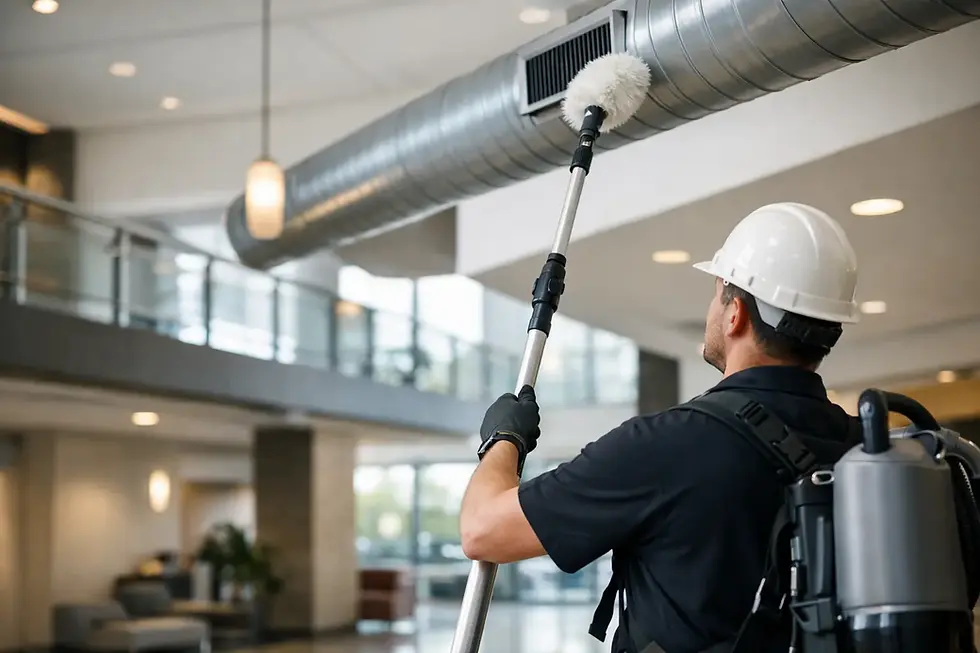
Periodic work should not be treated as an afterthought. Carpet extraction, upholstery treatment, grout and tile scrubbing, high dusting, window cleaning, and stone or floor care all affect hygiene and presentation. Dirt does not stay only where it lands. It migrates through foot traffic, settles on elevated surfaces, and collects in corners that routine service may not reach.
The trade-off is budget and disruption. More frequent service adds labor, while deep cleaning can require access restrictions or off-hours work. The right provider helps you schedule work around operations instead of asking operations to work around cleaning.
Build Accountability Into Every Shift
A cleaning plan only has value if it is performed consistently. Clear ownership is what turns a scope of work into dependable results.
Start with written expectations for each area: what is cleaned, what is restocked, what requires sanitizing or disinfecting, and what conditions must be reported immediately. Supervisory inspections should focus on outcomes, not just whether someone checked a box. Are restrooms odor-free and fully stocked? Are corners, baseboards, and edges receiving attention? Are floors safe, clean, and free from avoidable buildup? Are touchpoints being addressed when the building is active?
Communication should work both ways. Cleaning teams need a direct way to report leaks, damaged flooring, overflowing trash, pest activity, low supplies, or unsafe conditions. Facility leaders need a responsive contact when a service concern arises or a schedule changes. Problems happen in active buildings. What matters is whether they are addressed quickly and fully.
At GD Pro Services, that approach means treating service issues as operational responsibilities, not excuses. Detailed work, reliable scheduling, and responsive follow-through give clients one less moving part to manage.
Protect Floors, Restrooms, and Other High-Impact Areas
Some parts of a facility influence perception more than others. Floors and restrooms are at the top of that list because employees and visitors see them constantly and use them directly.
Floor care should be planned by surface type and traffic level. Daily sweeping, vacuuming, and damp mopping remove the abrasive grit that wears down finishes. Periodic machine scrubbing, stripping, waxing, polishing, or stone care may be needed to restore appearance and protect the material. The wrong chemical or pad can damage a floor, so specialized knowledge matters.
Restrooms require a different kind of discipline. Fixtures, partitions, dispensers, mirrors, floors, and waste receptacles all need regular service, but cleanliness also depends on supply levels and odor control. Empty soap dispensers or paper towel shortages can make a recently cleaned restroom feel neglected within minutes. During high-traffic periods, responsive replenishment is part of hygiene, not an optional extra.
Break rooms and food-service areas deserve similar attention. Crumbs, spills, grease, and waste can create odors and attract pests if they are not removed promptly. These areas need a schedule that reflects actual use, including the periods immediately after meal breaks or service rushes.
Prepare for the Work That Disrupts Routine
Facility conditions change fast after construction, special events, storms, seasonal traffic increases, or staffing shortages. A strong hygiene program includes a plan for these exceptions before they become visible problems.
Post-construction cleanup often involves fine dust, adhesive residue, debris, glass cleaning, detail work, and floor protection. Event cleanup may require rapid turnover of restrooms, seating areas, entrances, and trash stations. High-traffic days can call for day porter support to maintain appearance and supplies while the property remains open.
Flexibility is especially valuable for multi-use facilities. A school hosting an evening event, a hotel preparing for a group arrival, or an office completing a renovation may need extra coverage with little notice. A cleaning partner with broad capabilities can reduce the delays and confusion that come from coordinating multiple vendors.
Measure What People Can See and What Operations Can Verify
Cleanliness is partly visual, but it should not be judged only by appearance. A useful quality program combines inspections, service records, supply monitoring, response time, and direct feedback from building users.
Look for patterns. If a restroom repeatedly runs out of supplies, the issue may be the restocking schedule rather than the cleaner assigned to the area. If floors look dull soon after service, the problem may be the maintenance method, heavy soil at entrances, or a finish that needs restoration. If complaints rise at certain hours, staffing coverage may not match the building's traffic pattern.
The objective is continuous correction, not paperwork for its own sake. When cleaning data leads to better scheduling, stronger training, or a better method for a specific surface, it becomes a practical management tool.
A well-maintained facility sends a clear message before anyone speaks: this property is managed with care, the people inside it matter, and details will not be ignored. Set the standard around the conditions your operation truly faces, then work with a team that is prepared to meet it day after day.


Comments