
How to Remove Construction Dust From Commercial Spaces
- Aug 19
- 6 min read
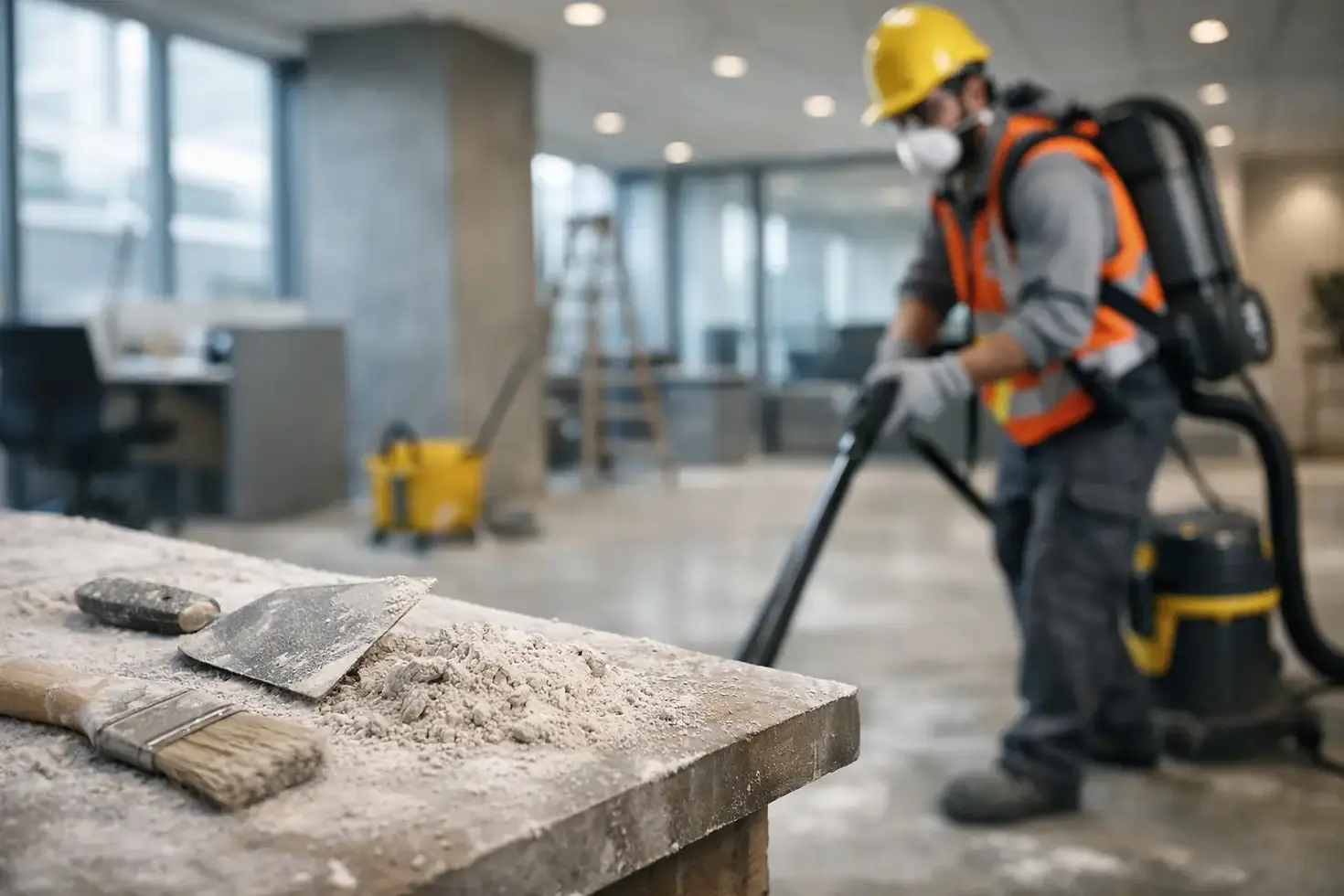
Construction dust has a way of showing up after the work looks finished. It settles on ledges, enters HVAC returns, dulls glass, coats flooring, and reappears on desks after an initial wipe-down. Knowing how to remove construction dust correctly helps commercial facilities protect indoor air quality, present a finished space, and avoid delays when tenants, employees, guests, or patients are ready to return.
For property managers, general contractors, and facility leaders, post-construction cleaning is not simply a final sweep. It is a controlled process. The order of work matters, the equipment matters, and the wrong method can spread fine particles deeper into the building or damage newly installed surfaces.
Start by Containing the Dust, Not Moving It Around
Before cleaning begins, confirm that all dust-producing work is complete. Sanding, cutting, drilling, drywall finishing, ceiling work, and punch-list repairs can undo hours of cleanup in minutes. Coordinate with the project team so cleaners are not working around active trades whenever possible.
Close off areas that are still under construction and keep interior doors closed between cleaned and uncleaned zones. If temporary barriers remain in place, leave them up until the heavy dust removal is complete. This limits migration into finished offices, corridors, common areas, and occupied spaces.
HVAC systems deserve special attention. Construction dust can collect in vents, returns, diffusers, and filters. Running a system before surrounding surfaces are cleaned may circulate fine dust throughout the facility. Work with the appropriate HVAC professional to determine whether filters need replacement and whether duct or vent cleaning is necessary. The answer depends on the type and volume of work completed, as well as whether the system operated during construction.
Use the Right Safety Controls for the Dust Present
Not all construction dust is the same. General drywall dust, sawdust, concrete dust, and debris from demolition can require different handling. Dust from concrete, stone, mortar, brick, or tile may contain respirable crystalline silica, which requires careful workplace controls. Older buildings can also introduce concerns involving lead paint, asbestos-containing materials, or other hazardous substances.
Do not assume a standard cleaning crew should handle a potentially hazardous condition. Identify what materials were disturbed, review project documentation, and follow applicable site safety procedures. When needed, use qualified specialists for testing, containment, and remediation.
For routine post-construction dust, cleaning personnel should still use appropriate personal protective equipment. Eye protection, gloves, and properly selected respiratory protection can help reduce exposure during heavy-detail cleaning. The goal is not to overcomplicate a standard cleanup, but to match the protection and process to the actual conditions on site.
How to Remove Construction Dust in the Proper Order
The most effective approach is top-to-bottom, dry removal before wet finishing. Starting at the floor and working upward only creates repeat work, because dust from ceilings, walls, fixtures, and ledges will settle again below.
Begin with high surfaces: ceiling ledges, exposed beams, vents, light fixtures, sprinkler heads, tops of doors, window frames, shelving, and cabinet interiors. Use HEPA-filtered vacuum equipment, microfiber tools, or controlled dusting methods that capture particles instead of sending them airborne. Avoid using compressed air or dry sweeping. Both may make an area look active, but they disperse fine dust rather than remove it.
After high dusting, clean vertical surfaces and detailed fixtures. Walls, baseboards, doors, frames, trim, counters, switches, outlets, and built-ins often hold a light film that is visible only when natural light hits the surface. Use clean microfiber cloths and a product that is compatible with the finish. Newly painted walls, natural stone, stainless steel, glass, and specialty flooring can be damaged by abrasive pads or overly aggressive chemicals.
Glass and mirrors should be cleaned after nearby surfaces have been dusted. Otherwise, fine debris can settle on the glass again and leave streaks. Detail work may need more than one pass, especially around window tracks, frames, mullions, hardware, and newly installed fixtures.
Flooring comes last. HEPA vacuum carpeting and rugs slowly enough to capture embedded particles. For hard floors, vacuum first, then damp mop using clean water and properly diluted floor cleaner. Change mop water and microfiber pads frequently. Reusing dirty water can leave a gray residue that makes a new floor look unfinished.
Do Not Skip the Areas Dust Reaches Indirectly
A commercial space can appear clean at eye level while dust remains in the places occupants notice later. It accumulates behind toilets, inside cabinets, above ceiling tiles, on fire extinguishers, around elevator tracks, inside closet corners, and along floor edges. It also settles on furniture, appliances, technology equipment, and window coverings after installation.
Restrooms, break rooms, kitchens, and healthcare-adjacent areas need particular care because construction dust can interfere with sanitation and presentation. Clean and detail all touchpoints, including handles, faucets, dispensers, light switches, railings, appliance controls, and counters. Then perform the required disinfection after soil and dust have been removed. Disinfectant is not a substitute for physical cleaning, and applying it over dusty surfaces reduces its effectiveness.
For restaurants, hotels, schools, medical facilities, and sports venues, reopening standards may be more demanding because of public traffic, food service, patient needs, or scheduled events. Build enough time into the cleanup plan for repeated detailing and inspection rather than treating the first pass as the final result.
Protect New Floors, Stone, and Finished Surfaces
Post-construction cleaning often happens around expensive finishes that have not yet faced normal daily use. That makes product selection and technique especially important.
Fine grit can scratch polished stone, luxury vinyl tile, finished concrete, and other hard surfaces if it is dragged under a mop or scrubber. Vacuum removal before damp cleaning is the safer choice. For natural stone, use products designed for stone care and avoid acidic cleaners unless the surface manufacturer specifically permits them. Acid can etch or dull certain stone finishes.
Carpet may hold drywall dust and fine debris below the visible surface. A careful HEPA vacuuming is typically the first step. Depending on the condition, hot-water extraction or low-moisture carpet cleaning may be appropriate after the dust is removed. The right method depends on carpet type, installation status, drying time, and whether the facility is preparing for immediate occupancy.
Avoid rushing to use heavy equipment just because it is available. A floor scrubber can be efficient in large open areas, but it may not be the right first tool where loose grit is present. Detailed workmanship prevents avoidable scratches, haze, and callbacks.
Inspect, Then Perform a Second Detail Pass
Construction dust is persistent. A quality cleanup plan includes a final inspection after the first complete cleaning cycle, ideally after the area has had time to settle. Walk the space with lights on and blinds open where practical. Look at horizontal surfaces from different angles, check corners and edges, and inspect high-visibility areas such as lobbies, reception desks, conference rooms, restrooms, and entry glass.
Use a simple closeout checklist tailored to the facility. Confirm that vents and returns are free of visible dust, touchpoints are clean, floors are residue-free, glass is clear, waste has been removed, and furniture or equipment is ready for use. If a space will receive final owner or tenant walkthroughs, schedule cleaning close enough to turnover that it still presents well, while leaving room for last-minute trade corrections.
This final pass is where reliable cleaning partners separate a basic construction cleanup from a turnover-ready facility. It is also the point where accountability matters most. If dust settles again, a responsive team identifies the source, corrects the issue, and protects the opening schedule.
When Professional Post-Construction Cleaning Makes Sense
A small office refresh may only require an internal team and the right equipment. Larger renovations, occupied buildings, healthcare environments, multi-floor properties, and fast-turn projects usually need a more structured response. The volume of dust, the type of surfaces, access limitations, and reopening deadline all affect the scope.
GD Pro Services supports post-construction cleanup with detailed, project-based coverage designed for commercial spaces throughout Central Florida and beyond when client needs require it. The right plan can include high dusting, detailed surface cleaning, floor and carpet care, interior glass cleaning, waste removal, and final presentation support coordinated around project turnover.
A clean handoff should feel finished, not almost finished. When construction dust is removed in the right sequence and every surface receives the attention it needs, the facility is ready to make the first impression it was built to deliver.


Comments