

Property Management Cleaning Services That Deliver
- 2 days ago
- 5 min read
A lobby can look neglected before a prospective tenant reaches the elevator. A missed trash pull, cloudy glass door, stained carpet, or dirty restroom sends a message that property operations are not under control. Property management cleaning services protect more than appearance. They help managers maintain safe, presentable, tenant-ready spaces without adding another daily operational burden to an already demanding schedule.
For managed properties, cleaning is rarely a single task with a single standard. It is a coordinated program that must account for tenant traffic, building use, vendor access, emergency needs, leasing activity, maintenance work, and the expectations of owners and visitors. The right cleaning partner brings order to that complexity with reliable people, clear scope, and detailed follow-through.
What Property Managers Need From a Cleaning Partner
Property managers are responsible for spaces that change throughout the day and throughout the year. A multifamily community may need clean breezeways and leasing offices before tours begin, while a commercial building may require restrooms, elevators, entry glass, and common areas serviced around tenant business hours. A mixed-use property can demand both, plus restaurant-adjacent cleanup and event support.
That is why a basic nightly janitorial checklist is not always enough. A service plan should reflect the property itself: its traffic patterns, hours of operation, floor surfaces, waste volume, public-facing areas, and lease turnover schedule. It should also establish who to contact when a spill, overflow, construction mess, or special event changes the plan.
Reliability matters just as much as task coverage. When a cleaning crew misses details repeatedly, property staff end up inspecting, documenting, escalating, and finding backup help. The time cost can be significant. A dependable provider takes ownership of service issues, communicates quickly, and corrects problems before they become tenant complaints.
Building a Practical Property Management Cleaning Plan
A strong program starts with a walkthrough, not a generic proposal. Each property has surfaces and pressure points that require different care. Polished stone in a main entrance needs a different maintenance approach than concrete corridors, luxury vinyl tile in a leasing office, or carpet in a high-traffic executive suite.
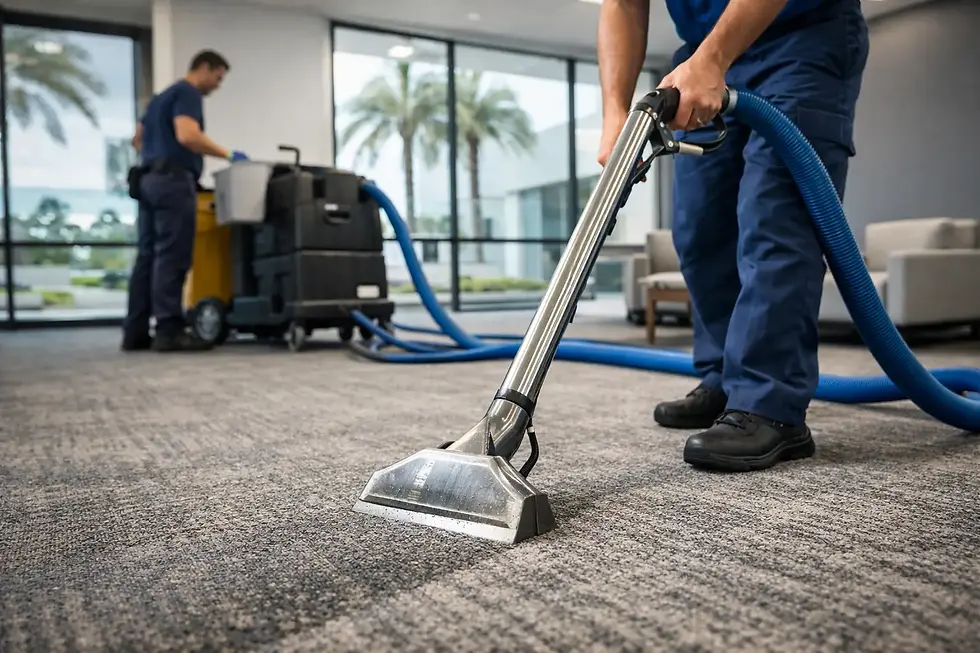
During planning, managers should identify which areas require daily attention, which need weekly or monthly detail work, and which are best handled as scheduled projects. High-touch surfaces, restrooms, trash areas, entrances, elevators, and shared amenities usually need frequent service. High dusting, interior windows, grout restoration, upholstery cleaning, carpet extraction, and floor refinishing may be scheduled less often, but they should not be overlooked until conditions become visibly poor.
The plan should also define service windows. Cleaning during business hours can keep a lobby or restroom consistently presentable, but it may be disruptive in a professional office or healthcare environment. After-hours work reduces disruption, yet it requires dependable access procedures and quality control. There is no single right schedule. The right choice depends on occupancy, security requirements, customer traffic, and the level of presentation the property must maintain.
Routine Cleaning Keeps Common Areas Working
Routine janitorial coverage is the foundation of a clean property. It may include restroom sanitation, trash removal, vacuuming, mopping, dusting, touchpoint disinfection, glass cleaning, and breakroom care. Consistency is what makes this work valuable. Tenants and visitors may not comment on a clean hallway, but they notice quickly when it is not maintained.
Common-area cleaning also supports safety. Wet floors, overflowing trash, tracked-in moisture, and debris near entrances can create hazards. Crews should use appropriate caution signage, follow site procedures, and respond promptly when conditions change. In Florida, where rain, humidity, and heavy foot traffic can affect entrances and floor conditions quickly, proactive service is particularly important.
Specialized Work Prevents Expensive Wear
Routine service cannot solve every cleaning issue. Floors, carpets, tile, grout, and stone surfaces need periodic specialized treatment to protect their appearance and useful life. Waiting until a surface looks permanently damaged often limits the results and increases restoration costs.
Floor care should be based on material, traffic, and manufacturer requirements. Incorrect products or aggressive methods can dull finishes, leave residue, damage protective coatings, or create slippery conditions. The same principle applies to carpet and upholstery. Spot treatment, low-moisture maintenance, and periodic deep extraction all have a place, but the right method depends on fiber type, staining, drying time, and the area’s use.
Property managers should also plan for high dusting in atriums, stairwells, exposed ceiling areas, and hard-to-reach ledges. These areas are easy to defer, yet visible dust and cobwebs can undermine the condition of an otherwise well-maintained property.
Vacancy Turns and Post-Work Cleanup Need Fast Response
Vacant units, suites, and turnover spaces create a different kind of cleaning demand. The work often has a deadline tied to leasing, inspections, handoffs, or incoming occupants. It may involve detail cleaning kitchens and restrooms, removing leftover debris, treating floors and carpets, cleaning windows, and preparing the space for photographs or showings.
Speed is valuable, but rushed work can create avoidable rework. A turnover crew should use a clear scope and inspect the space before it is released. This is especially important when maintenance, painting, or repair work is happening at the same time. Cleaning too early can mean doing the work twice. Cleaning too late can delay move-in readiness.
Post-construction cleanup requires another level of coordination. Fine dust settles on ledges, fixtures, vents, floors, and glass long after visible debris is removed. Adhesive residue, paint splatter, grout haze, and discarded materials must be addressed carefully without damaging new finishes. A cleaning contractor experienced in post-construction conditions can phase the work around final trades and prepare the property for turnover with fewer last-minute surprises.
The Value of One Accountable Service Provider
Vendor fragmentation creates work for the property team. One company handles nightly cleaning, another handles carpets, another handles windows, and a fourth is called when an event, staffing gap, or emergency occurs. Each vendor may have different contacts, schedules, insurance requirements, and quality standards.
Using one capable provider for recurring cleaning and specialized projects can simplify coordination. It does not mean every service should be bundled automatically. A manager should still evaluate scope, expertise, pricing, and response time. But when the provider has qualified teams for janitorial service, floor care, window cleaning, tile and grout work, high dusting, event cleanup, and staffing support, the property has fewer handoffs to manage.
GD Pro Services supports managed properties with tailored cleaning coverage built around real operating conditions. From recurring common-area service to detailed project work, the focus is on dependable scheduling, detailed execution, and results property teams can count on.
How to Measure Cleaning Performance
A cleaning agreement should make performance visible. Vague expectations such as “keep the building clean” leave too much room for disagreement. Clear standards help both the property manager and service provider understand what good work looks like.
Useful performance measures may include inspection results, completion of scheduled tasks, response time for service requests, recurring issue trends, supply levels, and tenant-facing conditions in key areas. Managers do not need to inspect every square foot every day, but they should know where quality is being checked and how concerns are documented and resolved.
Communication is part of performance. A provider should report access issues, damage noticed during service, supply shortages, leaks, safety concerns, or areas that need deeper treatment. That kind of proactive communication helps property teams act before small conditions become costly repairs or customer-service problems.
Choose a Program That Can Adjust
Properties are not static. Occupancy changes, seasonal weather affects entrances, a tenant moves out, an event increases traffic, or a renovation creates dust and debris. The best property management cleaning services are designed to adjust without confusion or excuses.
Start with the conditions people see and use every day, then build in the specialized care that protects the property over time. When cleaning crews are detailed, responsive, and accountable, managers can spend less time chasing vendors and more time keeping tenants, owners, and visitors confident in the property.


Comments