
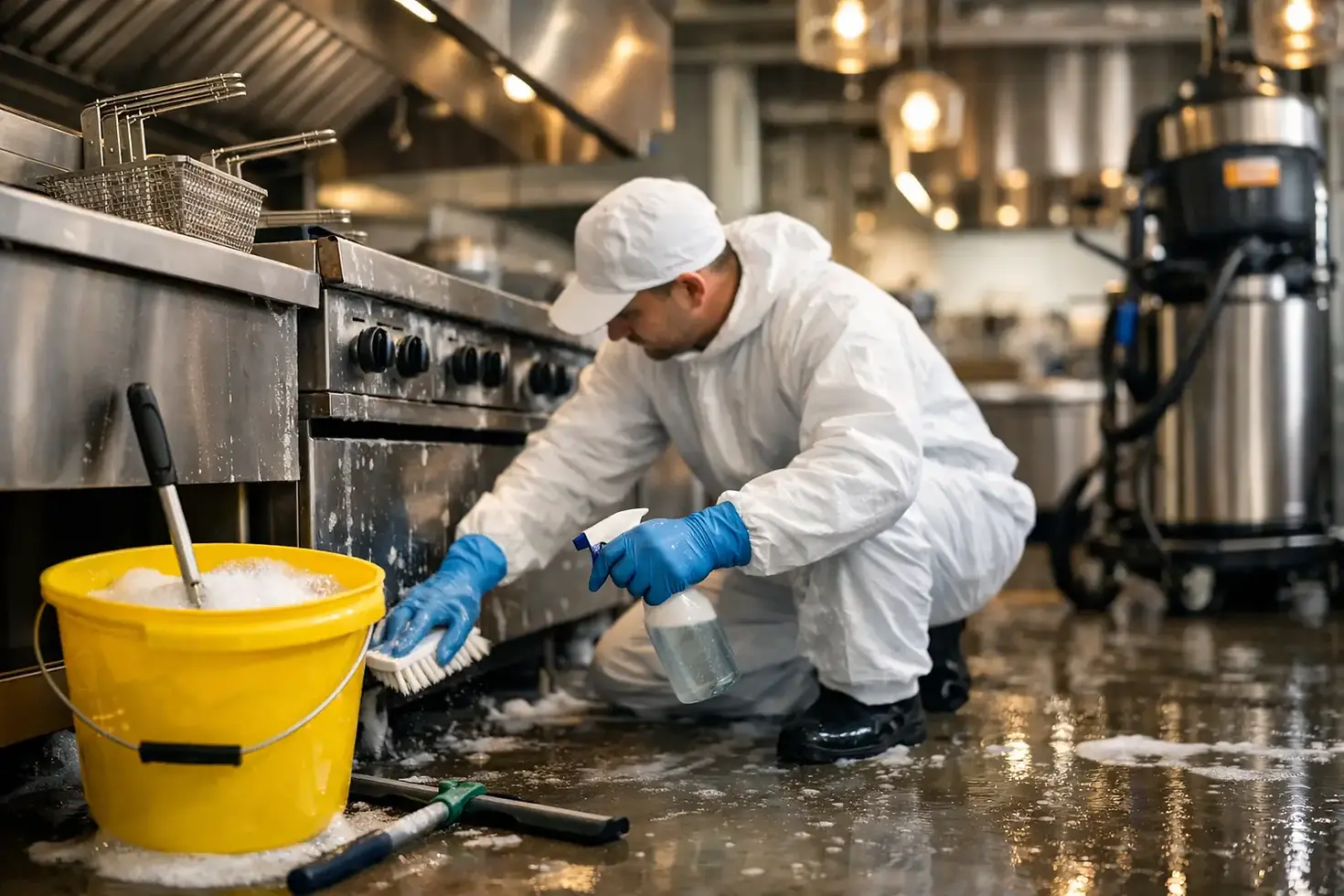
Commercial Kitchen Deep Cleaning That Holds Up
A kitchen can look presentable at the start of service and still carry grease, food residue, and soil in the places that create the biggest operational risk. Commercial kitchen deep cleaning goes beyond the nightly wipe-down to address equipment exteriors, floors, grout, walls, vents, hard-to-reach edges, and other buildup that routine crews may not have time to reach.
For restaurant managers, hotel operators, school foodservice leaders, and property teams, this work protects more than appearance. A properly planned deep clean supports safer working conditions, better odor control, easier maintenance, and a kitchen that is more prepared for health inspections and busy service periods.
What Commercial Kitchen Deep Cleaning Should Cover
Routine cleaning keeps a kitchen functioning from shift to shift. Deep cleaning restores the areas where grease and residue accumulate gradually: behind cooking equipment, beneath shelving, around floor drains, on vertical surfaces, and in the detailed components of the workspace. The goal is not to interrupt operations with unnecessary work. It is to target conditions that cannot be corrected with ordinary daily cleaning.
The scope should be based on the kitchen's equipment, menu, traffic, and operating hours. A high-volume restaurant with fryers, grills, and late-night service has different needs than a corporate cafeteria or a hotel banquet kitchen. Grease-producing equipment and high-heat areas generally require more frequent attention, while low-use storage areas may be scheduled less often.
A thorough project commonly includes detailed cleaning of cook lines, hood exteriors, fryers, ovens, grills, stainless-steel surfaces, reach-in units, prep tables, walls, doors, baseboards, floor drains, tile, grout, and floors. It may also include cleaning behind and beneath movable equipment where food debris and grease collect out of sight.
The work must be coordinated carefully. Some equipment requires cooling time, safe shutoff procedures, or manufacturer-approved cleaning methods. Certain areas may be outside the cleaner's scope, including internal hood-system service, fire-suppression work, equipment repair, or grease-trap pumping. Clear boundaries prevent assumptions and make sure every responsible vendor is working to the same plan.
Why Deep Cleaning Affects Daily Operations
Grease is not only a visual problem. It can make floors slick, hold odors, attract pests, and turn routine maintenance into a larger project. Residue on walls, grout, and equipment surfaces can also make a kitchen feel neglected to employees, managers, inspectors, and guests who pass through back-of-house areas.
A detailed cleaning program makes daily sanitation more effective because crews begin with cleaner surfaces. When grout lines, floor edges, and equipment legs are heavily soiled, a basic mop-and-wipe routine cannot produce consistent results. After a deep clean, staff can maintain a higher standard with less effort and identify new spills or buildup before they become embedded.
There is also a staffing benefit. Kitchen employees should be focused on safe food preparation and service, not attempting difficult after-hours cleaning tasks without the right tools, chemicals, training, or labor coverage. A dependable commercial cleaning partner can provide a scheduled crew for the labor-intensive work while management keeps its attention on the operation.
The Right Frequency Depends on the Kitchen
There is no single schedule that fits every foodservice operation. A busy kitchen serving fried foods throughout the day may need targeted deep cleaning monthly or even more often in selected areas. A lower-volume facility may operate successfully with quarterly service, supported by strong daily and weekly cleaning routines.
When setting the frequency, look at grease production, customer volume, number of service periods, ventilation performance, available staff, flooring type, and the condition of the kitchen at closing. Consider event calendars as well. Hotels, sports venues, and catered facilities often need additional cleaning before or after high-volume functions, not simply on a fixed monthly date.
Warning signs that the schedule needs adjustment include persistent odors, dark grout, slippery floors, visible residue on equipment bases, debris behind cook lines, recurring pest concerns, or employees spending excessive time trying to catch up on cleaning. These are operational signals, not problems to hide until an inspection or complaint forces action.
A Practical Process for a Deep Clean
Strong results start before a crew arrives. The facility manager and cleaning provider should walk the kitchen or review a detailed scope together. This identifies access limitations, sensitive equipment, service hours, water availability, waste procedures, and areas that need special attention. It also helps avoid disruptions to deliveries, prep work, and opening duties.
Prepare the Space and Protect Equipment
The kitchen should be cleared of exposed food, utensils, and movable items as appropriate. Equipment must be cool and safely prepared before cleaning begins. A professional crew protects nearby surfaces and uses the correct products for stainless steel, tile, grout, quarry tile, and other materials rather than applying one aggressive chemical everywhere.
Chemical choice matters. Degreasers can be highly effective, but using the wrong concentration or leaving product on a surface too long can damage finishes, create slip hazards, or leave residue. The best approach is controlled application, agitation where needed, thorough rinsing, and complete drying.
Clean From High Areas to Floors
A logical sequence prevents re-soiling completed work. Crews typically address high dusting and upper surfaces first, then walls, equipment exteriors, detailed edges, and finally floors and drains. Areas behind and beneath equipment should not be treated as optional. They are often where grease, food particles, and moisture have had the longest time to build up.
Floor care requires special attention because it affects safety immediately. Tile and grout may need mechanical scrubbing or specialty treatment to lift embedded soil. Floor drains should be cleaned according to the agreed scope, with care taken to avoid pushing debris into drainage systems. The finished floor should be rinsed and dried so the kitchen can reopen in a safe condition.
Inspect Before Turnover
A deep-cleaning service is not complete when the crew puts away its tools. A final inspection confirms that the agreed areas were addressed, waste was removed properly, floors are safe, and equipment has been returned as required. Any conditions outside the cleaning scope, such as failing caulk, damaged grout, a loose tile, or a maintenance concern, should be documented for the facility team.
That accountability is especially valuable for multi-site operators and property managers. A clear scope, consistent checklist, and responsive follow-up make it easier to verify vendor performance across locations without having to manage every detail in person.
Choosing a Commercial Kitchen Cleaning Partner
The lowest quote is not always the lowest operating cost. An under-scoped service can leave the hardest areas untouched, require your staff to redo work, or create last-minute scheduling problems before an inspection or event. Look for a provider that asks practical questions about your operation instead of offering a one-size-fits-all package.
A capable partner should be able to work after hours, around service schedules, and alongside your existing janitorial program. They should also have the labor depth to handle one-time recovery work, recurring projects, and cleaning needs that expand during renovations, events, or staffing gaps. For Florida facilities with multiple demands, GD Pro Services brings detailed commercial cleaning support and a can-do approach to changing site conditions.
Before approving service, confirm the work areas, access plan, timing, products, equipment-moving responsibilities, inspection process, and any exclusions. A defined scope protects both parties. It turns a vague request to clean the kitchen into measurable work that can be reviewed, repeated, and improved.
Keep the Results Between Deep Cleans
Deep cleaning works best when it supports, rather than replaces, daily discipline. Kitchen leaders should make closing responsibilities realistic, assign ownership for spill response and drain-area checks, and give staff a simple way to report issues before they grow. A deep-cleaning provider can also help identify recurring trouble spots, such as fryer-side floors or the space behind a particular cook line, so the routine schedule becomes more effective.
The right standard is not a kitchen that looks clean only when someone is expected to inspect it. It is a kitchen where staff can work confidently, managers can see the condition of the facility clearly, and cleaning results hold up through the next demanding shift.


Comments